Condition
Prostate Artery Embolization (PAE)
Find Relief From an Enlarged Prostate — Without Surgery
Overview
At Buffalo Vascular Care, we offer Prostate Artery Embolization (PAE), a minimally invasive treatment for urinary symptoms caused by Benign Prostatic Hyperplasia (BPH), commonly known as an enlarged prostate.
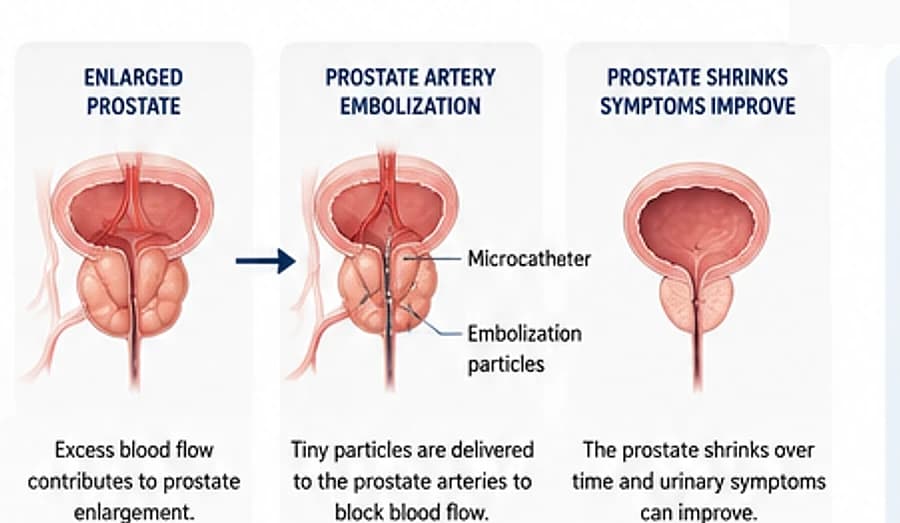
PAE reduces blood flow to the enlarged prostate, allowing it to gradually shrink and relieve pressure on the urinary tract — without traditional prostate surgery.
Relieve urinary symptoms. Improve your sleep. Get back to living comfortably.
BPH
What Is an Enlarged Prostate (BPH)?
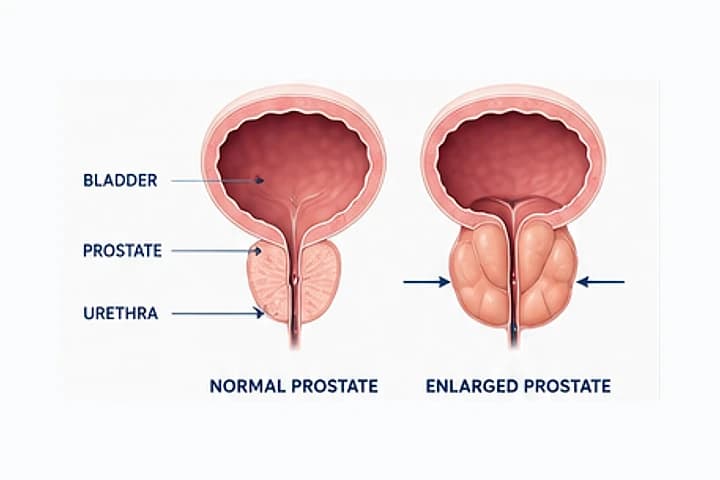
Benign Prostatic Hyperplasia (BPH) is a noncancerous enlargement of the prostate gland that becomes increasingly common as men age. The prostate surrounds part of the urethra, the tube that carries urine from the bladder. As the prostate enlarges, it can press against the urethra and make it more difficult for urine to flow normally.
Although BPH is not cancer, its symptoms can interfere with sleep, daily activities, and overall quality of life.
Symptoms
Common Symptoms of BPH
- Frequent urination
- Waking several times during the night to urinate
- Sudden or urgent need to urinate
- Weak or interrupted urine stream
- Difficulty starting urination
- Starting and stopping while urinating
- Feeling that the bladder has not completely emptied
- Difficulty or inability to urinate
- Blood in the urine in some patients
Treatment options
Treatment Options for BPH
Mild Symptoms — Lifestyle Changes and Monitoring
Some patients with mild symptoms may manage their condition with lifestyle changes and regular monitoring.
Moderate Symptoms — Medication
Medications may improve urinary symptoms, but they may not provide enough relief for everyone and can cause unwanted side effects.
Persistent or Severe Symptoms — Procedural or Surgical Treatment
When symptoms continue despite medication, additional treatment may be appropriate.
A Minimally Invasive Option — Prostate Artery Embolization (PAE)
For appropriately selected patients, PAE offers an alternative to traditional prostate surgery.
PAE
What Is Prostate Artery Embolization?
PAE is a minimally invasive, image-guided procedure that treats an enlarged prostate from inside the blood vessels rather than through the urinary tract.
Using advanced X-ray guidance, a Buffalo Vascular Care interventional specialist guides a very small catheter through the blood vessels to the arteries supplying the prostate. Tiny particles are then carefully delivered into these arteries to reduce blood flow.
With less blood flow, the prostate gradually shrinks, reducing pressure on the urethra and helping improve urinary symptoms.
No large incision. No removal of prostate tissue. Done at our outpatient facility. Go home within a few hours.
Video
See it explained
The experience
Your PAE Experience at Buffalo Vascular Care
- 01
Consultation & Evaluation
We review your urinary symptoms, medical history, current medications, previous BPH treatments, laboratory testing, and available imaging. Our team will help coordinate any additional imaging needed for your PAE evaluation.
- 02
Treatment Planning
Our team reviews your imaging and vascular anatomy to determine whether PAE is appropriate and develops an individualized treatment plan.
- 03
Image-Guided Access
A tiny puncture is made in an artery, typically through the wrist or groin. Using advanced image guidance, the physician carefully guides a small catheter through the blood vessels to the arteries supplying the prostate.
- 04
Reduce Blood Flow
Tiny particles are carefully delivered through the catheter to reduce blood flow to the enlarged prostate. Over the following weeks and months, the prostate gradually shrinks and urinary symptoms may improve.
- 05
Recover & Follow Up
PAE is performed as an outpatient procedure, allowing most patients to return home the same day. Buffalo Vascular Care provides detailed recovery instructions and continues to follow your progress after treatment.
Benefits
Potential Benefits of PAE
- Minimally invasive
- No open surgical incision
- No removal of prostate tissue
- Outpatient treatment
- Does not require general anesthesia
- Short recovery
- Patients return home the same day
- Low risk of urinary incontinence
- Low risk of sexual side effects compared with some surgical BPH treatments
- Improvement in bothersome urinary symptoms and quality of life
Candidacy
Is PAE Right for You?
A PAE consultation may be appropriate if you:
- Have bothersome urinary symptoms caused by BPH
- Frequently wake at night to urinate
- Have a weak or interrupted urine stream
- Feel like your bladder does not completely empty
- Have not experienced enough relief from medication
- Have difficulty tolerating BPH medications
- Have a large prostate
- Want to avoid traditional prostate surgery
- Prefer a minimally invasive treatment with a shorter recovery
- Are concerned about sexual side effects associated with some BPH treatments
PAE is not right for everyone. Our team will evaluate your symptoms, medical history, imaging, and treatment goals to determine whether PAE is an appropriate option.
Why BVC
Why Buffalo Vascular Care?
At Buffalo Vascular Care, minimally invasive treatment is what we do. Our experienced interventional team combines advanced imaging, innovative technology, and personalized care to provide alternatives to traditional surgery whenever appropriate.
- Personalized consultation and treatment planning
- Advanced image-guided care
- Minimally invasive outpatient treatment
- Coordination of imaging needed for your evaluation
- Comprehensive follow-up after your procedure
Common Questions
Frequently Asked Questions
Who performs PAE?
PAE is performed by an Interventional Radiologist, a physician specially trained in using advanced imaging to perform minimally invasive procedures through the body's blood vessels.
How do I prepare for PAE?
Buffalo Vascular Care will provide individualized instructions. Depending on your medical history, you may need laboratory testing or imaging. We will review your medications, including blood thinners, and provide instructions about eating and drinking before the procedure. Tell us about any previous reaction to contrast material.
Will I need general anesthesia?
PAE is performed using local anesthesia and sedation rather than general anesthesia.
How long does PAE take?
The procedure generally takes approximately one to two hours, although procedure time varies depending on each patient's anatomy.
Will anything go through my urethra?
PAE is performed through the blood vessels, not through the urethra. Whether a urinary catheter is needed depends on your individual clinical situation.
Will PAE affect my sexual function?
PAE has a low risk of sexual side effects compared with some surgical BPH treatments. Individual results vary, and your physician will review potential benefits and risks with you.
When will I notice improvement?
PAE works gradually. Many patients begin noticing improvement within the first several weeks, with symptoms continuing to improve over the following months as the prostate decreases in size.
What should I expect after PAE?
Some patients experience temporary pelvic discomfort, urinary frequency or urgency, burning with urination, fatigue, a small amount of blood in the urine, or bruising at the puncture site. Your care team will provide instructions for managing symptoms and when to contact the office.
How quickly can I return to normal activities?
Recovery is generally quick. Many patients gradually return to usual activities within a few days, depending on how they feel and their physician's recommendations.

Ready to Find Relief?
If symptoms from an enlarged prostate are affecting your sleep, daily activities, or quality of life, Buffalo Vascular Care may be able to help. Schedule your Prostate Artery Embolization consultation with Buffalo Vascular Care today.
Most insurance accepted